
Business Empire: RichMan
AAA FunSimulation
3.810.75K Reviews
- Version
- 1.25.22
- Installs
- 10.00M
- Age Rating
- Everyone
Screenshots
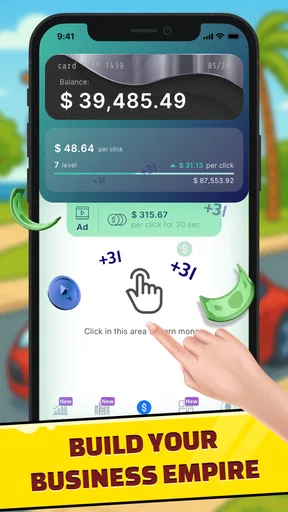

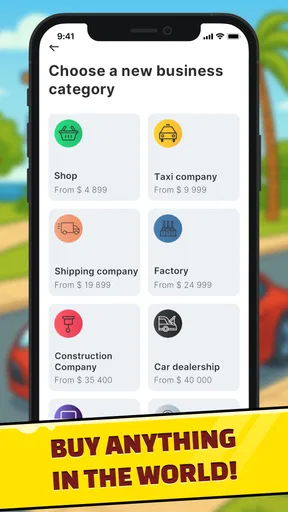



Our Review of Business Empire: RichMan
 Analysis by Appyee
I spent time with Business Empire: RichMan as a business-focused simulation game, and my first impression was that it understands the appeal of building something from almost nothing. Instead of asking you to fight, race, or solve puzzles, it puts the satisfaction of making deals and growing a virtual company at the center. That makes it a natural fit for players who enjoy watching small decisions gradually turn into a larger operation.
The game is free to start, which makes trying it fairly easy. It comes from AAA Fun and is listed for Everyone, so its presentation is aimed at a broad audience rather than a mature or highly specialized group. It has also attracted a substantial player base, with more than ten million installs, while its average sits at 3.9 from roughly 170 thousand ratings. Those figures suggest a game with clear reach, although they also tell me that it will not satisfy every type of management-simulation fan.
Building a business one decision at a time
The central appeal is the rhythm of a tycoon simulator: make a business move, wait for the result, then decide where the next opportunity lies. I like this format when I want something I can check in short sessions. It does not demand the same uninterrupted attention as a strategy game with a real-time battlefield, yet it still gives each return visit a purpose.
What makes the experience work is the feeling of progression. Early decisions matter because resources are limited, and a profitable deal can change what becomes possible next. Later, the challenge is less about simply earning and more about deciding how aggressively to expand. That shift is important. A game like this can become dull if every action is obviously correct, so the best moments come when I have to choose between a safer improvement and a more ambitious opportunity.
I would describe the tone as accessible rather than deeply technical. You do not need a background in finance to understand the basic attraction of increasing income and improving your position. At the same time, players who enjoy optimizing every variable may find the experience lighter than a full management sandbox. The game is strongest when treated as a compact business fantasy, not as a serious economic model.
How I approached the early game
My most useful habit was resisting the urge to spend every available resource as soon as it appeared. In a business game, visible progress can be tempting, but keeping some flexibility makes the next decision less stressful. I found it better to look at the likely effect of a purchase or deal over several visits rather than judging it only by its immediate reward.
Another practical approach is to set a small objective before closing the game. For example, I might return with the intention of improving one part of the business rather than trying to transform everything at once. This makes the waiting and checking cycle feel more purposeful. It also helps reveal whether the game suits you: if you enjoy gradual progress and repeated planning, the structure has a good chance of holding your attention.
I would not recommend treating every opportunity as equally valuable. A large-looking deal is not automatically the best choice if it leaves you unable to make a useful follow-up move. The better question is whether the decision improves your next few actions. That simple change in thinking turns the game from a sequence of taps into a more satisfying planning exercise.
What the free entry really means
The download costs nothing, so you can explore the core experience without committing money up front. That is a meaningful advantage for a casual player who wants to test the pace before deciding whether the game deserves regular attention. It also makes the title easier to recommend to friends who are curious about business simulations but do not normally buy mobile games.
There are optional in-app purchases, with individual items ranging from $0.99 to $9.99. I would therefore separate free access from paid value. Starting for free tells you that the entry barrier is low; it does not, by itself, prove that spending improves the experience or that every important part of the game remains equally comfortable without purchases. I would play the opening portion first and decide based on whether the normal progression feels enjoyable, rather than buying early simply because an offer appears.
This distinction matters especially in a slow-building simulation. If you like the process of waiting, planning, and earning gradually, paying to accelerate progress may remove part of the appeal. If you mainly want to experiment with larger business decisions and dislike repeated pauses, an optional purchase could feel more attractive. The value depends on which part of the loop you enjoy, and I would not assume that spending is necessary to understand the game.
There is also a psychological trade-off. A free game can be easy to install and difficult to leave, particularly when each return promises one more improvement. I recommend deciding in advance whether you are comfortable with optional purchases. That small boundary keeps the focus on the simulation itself instead of turning every slower moment into a reason to spend.
Where the game delivers its best value
The strongest value is convenience. I can pick it up for a short check-in, make a decision, and leave without needing to remember a complicated control scheme. That makes it suitable for a commute, a quiet break, or an evening when I want a game that provides direction without demanding complete concentration.
It also offers a nice change from the usual alternatives in the simulation category. A city builder generally asks me to think about space, services, and the visual shape of a growing settlement. A farming game often centers on routines, production chains, and character relationships. Business Empire: RichMan is more focused on the satisfaction of deals and financial growth. If the idea of expanding an enterprise is more appealing to you than decorating a town or maintaining crops, this is the more direct choice.
Compared with a spreadsheet-heavy business simulator, it is easier to approach and less intimidating. That accessibility is useful for newcomers. The trade-off is that experienced management players may want more depth, more variables, or more consequences than a mobile-first experience provides. I see it as a middle ground: more purposeful than a purely idle number display, but less demanding than a detailed economic strategy game.
One of the less obvious strengths is how well it can support personal pacing. You can make it a quick daily routine, or spend longer thinking through the next direction when you are in the mood. I appreciate games that do not punish me for having an unpredictable schedule. The experience becomes more enjoyable when I accept that not every session needs to produce a dramatic breakthrough.
A realistic everyday use case
Imagine having ten minutes before an appointment. A competitive multiplayer game may be risky because you could be interrupted, while a story-driven game may not offer enough time to settle into its world. Here, I can open the business, review what has changed, make one considered decision, and close it again. That is a practical reason to keep it installed even if it is not the only game I play.
On a longer evening, I would use the same session differently. I might compare several possible moves, think about which one creates the best next step, and then leave the game to continue its gradual rhythm. The important point is that the experience works best when I give each action a little context. Tapping through everything as quickly as possible makes the business feel less like something I am managing and more like a list I am clearing.
The friction you should understand first
The biggest limitation is the possibility of repetition. Business simulations naturally rely on recurring actions, and this one may feel routine if you need constant novelty. The pleasure comes from progression and decision-making, not from a changing story or a constant stream of new mechanics. If you prefer games that deliver a fresh challenge every few minutes, this may feel too measured.
There is also a difference between a game that looks like business and one that models business in detail. I would not choose this expecting a professional training tool or a realistic lesson in investing. Its purpose is entertainment through the fantasy of making profitable deals and growing an empire. That can be satisfying, but it is not the same as learning how real markets behave.
Optional purchases are another point to watch. The listed range is modest at the lower end but reaches $9.99 for an individual item, so I would pay attention to how often the game presents paid shortcuts during normal play. Even when purchases are genuinely optional, their presence can affect how I perceive the pace. Players who want a completely uninterrupted free experience should be prepared to judge that balance for themselves during the opening sessions.
The rating of 3.9 also gives me a useful expectation: this is a broadly appealing game with room for disagreement. I would not install it assuming universal polish or endless depth. Instead, I would treat the first few sessions as a test of whether the core loop feels rewarding before investing significant time in long-term progress.
Small strategies that make the loop better
My first tip is to separate expansion from maintenance in your thinking. A move that increases the size of the business may look exciting, but a quieter improvement can sometimes make future choices easier. I try to ask whether I am building a stronger base or merely chasing the most visible reward.
Second, use short sessions to gather information rather than forcing progress. If you are unsure about a decision, returning later can make the next choice feel clearer because you have seen how the current position develops. This is particularly useful for players who tend to spend resources impulsively.
Third, keep a personal stopping point. Once I have completed the one objective I set for a session, I can leave without feeling that I must keep checking for another improvement. That protects the game’s relaxing side and prevents the business loop from becoming a chore.
Finally, compare paid options with the value of your time, not just the size of the offer. If you enjoy the gradual process, acceleration may be poor value even when it seems convenient. If your main interest is testing broader decisions, paying for a shortcut may be more understandable, but I would still wait until I knew the free experience had earned my attention.
Who should install it?
I think it is a good match for players who enjoy management games but want something approachable on a phone. It suits people who like watching income grow, making choices with limited resources, and returning to a project over time. It is also a sensible recommendation for someone curious about the tycoon format and unwilling to pay before trying it.
The Everyone age rating makes it broadly accessible, but accessibility should not be confused with universal appeal. Younger or casual players may enjoy the clear business fantasy, while serious simulation fans may want more detail than the game provides. It is best for someone who values a relaxed progression loop over strict realism.
I would skip it if you need a strong narrative, direct competition, or constant action. I would also look elsewhere if your ideal business game is built around complex accounting, detailed market analysis, or highly realistic consequences. A city builder, farming simulator, or deeper strategy title could be a better fit depending on whether you prefer construction, routine production, or intricate planning.
Device expectations and long-term choice
The current version is 1.25.21, and the minimum operating-system requirement is Android 7.1. That makes it approachable for people using older compatible Android devices, although the actual comfort of play will still depend on the phone or tablet you own. I would make sure the game feels responsive and readable on your screen before deciding whether it belongs in your regular rotation.
With more than ten million installs, it is clearly not an obscure experiment. That level of adoption makes it easier to see the game as an established option in mobile business simulation rather than a title with no audience. Still, popularity alone does not answer the important question: will you enjoy its pace? For me, the answer depends almost entirely on whether gradual growth feels rewarding rather than slow.
After trying it, my verdict is a cautious recommendation. Business Empire: RichMan is worth downloading for free if you enjoy patient tycoon progression and want to decide about spending only after experiencing the loop. I would not recommend buying anything immediately, because the paid value depends on how you personally view waiting and gradual development. Players who enjoy compact business decisions may find a comfortable long-term game here; players seeking deep economic realism or constant variety should skip it.
In the end, I see it as a friendly entry point into mobile business simulation. It does not need to replace a deeper strategy game, and it should not be judged as though it were one. Its appeal is the simple pleasure of turning a modest position into something larger, one decision at a time. If that sounds like the kind of progress you enjoy checking during spare moments, the free starting point makes trying it a reasonable choice.
Verdict
Strengths of Business Empire: RichMan
- Multiple business types make progression feel varied.
- Offline earnings help maintain progress between play sessions.
- Simple controls make it easy to play on mobile devices.
- Frequent upgrades provide clear short-term goals.
- Suitable for casual players who enjoy incremental growth.
Limitations of Business Empire: RichMan
- Progress can feel repetitive after extended play.
- Premium currency may be tempting for faster expansion.
- Some upgrades require considerable waiting time.
- The interface can become crowded as businesses increase.
- Late-game progress may depend heavily on careful resource management.
Other Releases by AAA Fun
View All
Similar Picks in This Category
View All
Truckers of Europe 3
Wanda Software4.3

Town Building Life Simulator
XGame Global4.2

Fidget Toys Trading・Pop It 3D
Freeplay Inc4.7

Sculpt People
CrazyLabs LTD4.4

Scary Teacher 3D
Z & K Games4.2

Hair Tattoo: Barber Shop Game
CASUAL AZUR GAMES4.3
Frequently Asked Questions
What is Business Empire: RichMan?
Business Empire: RichMan is a business simulation and idle tycoon game in which you build a virtual financial empire. You can invest in different companies, manage businesses, purchase assets, and increase your in-game income over time. The main appeal is watching your earnings grow while making strategic decisions about where to place your virtual money.
How do you make money in Business Empire: RichMan?
You make money by purchasing and upgrading businesses, investing in available opportunities, and collecting income generated by your assets. Some activities require active management, while others continue producing earnings in the background. Progress depends on reinvesting profits wisely, choosing upgrades carefully, and balancing short-term rewards with longer-term growth.
Is Business Empire: RichMan free to download and play?
Business Empire: RichMan can generally be downloaded and played without an upfront purchase, although the game may include optional in-app purchases. These purchases can provide extra currency, faster progress, or other convenience features. You can still enjoy the core simulation without spending money, but advancing more quickly may require patience or occasional interaction with advertisements.
Does Business Empire: RichMan require an internet connection?
An internet connection may be needed for certain features, including advertisements, cloud-related functions, account synchronization, updates, and in-app purchases. Some parts of the business simulation may remain accessible while offline, but availability can vary depending on the version and device. For the most reliable experience, launch the game online and keep it updated.
Is Business Empire: RichMan suitable for beginners?
Yes, Business Empire: RichMan is relatively approachable for beginners because its basic gameplay revolves around earning money, buying businesses, and upgrading income sources. However, new players should still pay attention to costs and returns instead of spending every reward immediately. The game is best suited to users who enjoy gradual progression, idle mechanics, and simple strategy rather than fast-paced action.
Play our best games!


